
جلبک آسکوفیلوم نودوزوم

Ascophyllum nodosum - Based Biostimulants : Sustainable Application in Agriculter for the Stimulation of plant growth, stress tolerance, and dosease mangement
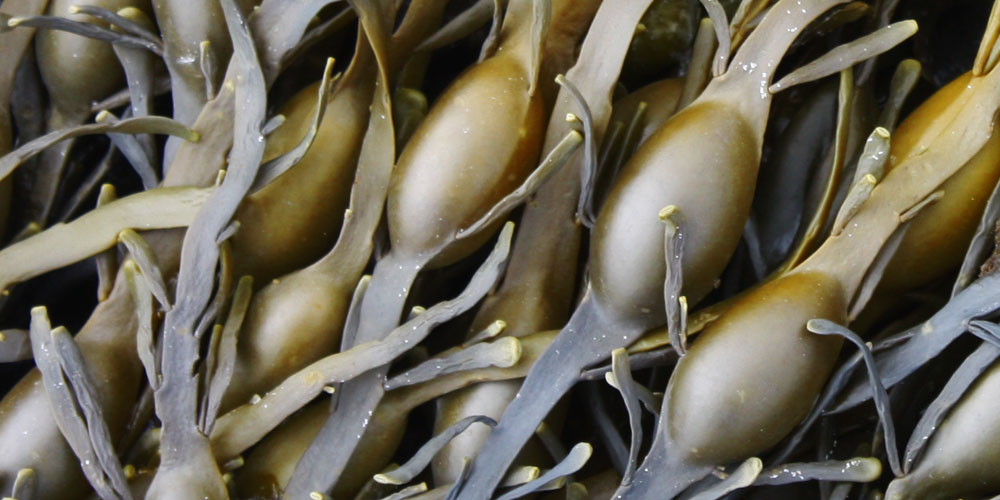
The global effects of negative climatic changes have manifested as desertification, increased atmospheric CO2 and temperature, soil salinization, and nutrient imbalances (e.g., mineral toxicity
and deficiency) and have caused dramatic effects on agricultural production and the quality of crops (dos Reis et al., 2012). Such abiotic stresses have reduced the growth, development, productivity, and quality of plants and, in extreme conditions, resulted in death and local extinction of species. Abiotic stresses are reported to have led to an average yield loss greater than 50% in most crops (Boyer, 1982; Vinocur and Altman, 2005). Rice yields declined 15% per 1_Crise in mean growing season temperature, measured from 1979 to 2003 (Peng et al., 2004). Additionally, changing climatic conditions can increase plant susceptibility to pathogens (West et al., 2012; Elad and Pertot, 2014), further increasing adverse growing conditions for plants.
The global amount of cultivable land available for agriculture is continuously shrinking due to urbanization and the adverse effects of climate change. In order to meet the ever-increasing demands of the growing human population, world food production must double by the year 2050 (Qin et al., 2011; Voss-Fels and Snowdon, 2016). To address the pressures associated with increasing agricultural productivity to subsequently meet the rising demands for food, producers have turned to excessive applications of synthetic (chemical) fertilizers and pesticides.
جلبک قهوه ای اکلونیا ماکسیما محصول AGchem آفریقای جنوبی
These harmful chemicals pose both short- and long-term threats to the health of the entire biosphere (Damalas and Koutroubas,2016). Therefore, an effective, biological-based alternative is
required in order to reduce dependency on synthetic fertilizers and pesticides. Plant biostimulants are a new class of crop input, offering a potential alternative to traditional, agro-chemical inputs, and, in most cases, can reduce the application rates of synthetic fertilizers and pesticides by enhancing their efficacy (Calvo et al., 2014; Van Oosten et al., 2017; Yakhin et al., 2017).
According to the European Biostimulants Industry Council (EBIC), “plant biostimulants contain substance(s) and/or microorganisms whose function when applied to plants or the rhizosphere is to stimulate natural processes to enhance/benefit nutrient uptake, nutrient efficiency, tolerance to abiotic stresses, and crop quality”۱. The concept of biostimulants has been researched since 1933 (Yakhin et al., 2017) but has gained attention in more recent years as a potential solution to mitigate
the negative impacts of a changing climate on agriculture. It should be noted that seaweed extracts are but one of the inputs that are classed as biostimulants
جلبک قهوه ای آسکوفیلوم نوتوزوم محصول MoreCrop امریکا
Seaweeds are multi-cellular, macroscopic organisms found in coastal, marine ecosystems and are a rich source of polysaccharides, polyunsaturated fatty acids (PUFAs), enzymes, and bioactive peptides among others (Courtois, 2009; De Jesus Raposo et al., 2013; Ahmadi et al., 2015; Shukla et al.,2016; Okolie et al., 2018). In particular, inter-tidal seaweeds may be exposed to unfavorable conditions including extreme variations in temperature, salinity, and light. Seaweeds, as compared to terrestrial organisms, produce different stressrelated compounds that are essential for their survival in these environments (Shukla et al., 2016). As such, selected seaweed resources are important sources of plant biostimulants and are widely used to promote agricultural productivity (Khanet al., 2009; Sharma et al., 2014; du Jardin, 2015; Van Oosten et al., 2017). The most widely researched seaweed, used as a source for industrial and commercial plant biostimulants, is the brown, inter-tidal seaweed Ascophyllum nodosum. Various commercial extracts from A. nodosum have been demonstrated to improve plant growth, mitigate some abiotic and biotic stresses while also improving plant defenses by the regulation of molecular, physiological, and biochemical processes. Of all sources of seaweed-based biostimulants, those manufactured from A. nodosum are perhaps the best studied with various modes of action being proposed (Figure 1). This review focuses on accumulating current knowledge of the bioactive compounds presents in A. nodosum extracts and their modes of action in promoting plant growth in the presence of abiotic and biotic stresses
کانن حاوی اکلونیا ماکسیما و آسکوفیلوم نوتوزوم محصول Novichem ترکیه
MODES OF EXTRACTION
Various commercial entities utilize different, proprietary extraction (hydrolysis) procedures for he production of seaweed-based biostimulants in either liquid or soluble powder form (Kadam et al., 2013; Michalak and Chojnacka, 2015). Different extraction methods have been cited in the literature using both dry and wet biomass (Chojnacka et al., 2015; Michalak and Chojnacka, 2015; Bleakley and Hayes, 2017). The bioactivity and composition of A. nodosum biostimulants are not all identical and are indeed dependent on the extraction methods employed (Goñi et al., 2016).
Water-Based Extractions
The name of this extraction method is indicative of the process: biostimulatory compounds are harvested by blending and hydrating dried seaweed meal in the presence of water (Sharma et al., 2014). The solid residues are separated using different filtration methods based on the end use of the biostimulant. Biostimulants prepared using this method are reportedly rich in phytohormone-like activity (Blunden and Wildgoose, 1977;Crouch and van Staden, 1993).
Acid Hydrolysis
In this method, freshly chopped Ascophyllum biomass was treated with sulfuric acid or hydrochloric acid at 40–50_Cfor 30 min (Sharma et al., 2014). It was reported that acid hydrolysis removed complex phenolic compounds and increased de-polymerization of polysaccharides (Flórez-Fernández et al.,2018). This method is generally used for the extraction of fucosecontaining sulfated polysaccharides (Ale et al., 2012; Flórez- Fernández et al., 2018). Sulfated algal polysaccharides are a class of bioactive compounds in algal extracts that promote
plant growth (Fry et al., 1993; Paulert et al., 2009; Shukla et al., 2016). Marais and Joseleau (2001) purified fucoidans from A. nodosum by acid hydrolysis. AZAL5R is a commercially available biostimulant manufactured from A. nodosum, which is extracted through acid hydrolysis (Jannin et al., 2013).